Capacitance Multimeter Explained: A UK Buyer's Guide
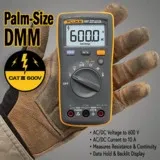
Choosing a capacitance multimeter sounds straightforward until you compare spec sheets and realise that not every meter measures capacitance well, quickly or safely in real working conditions. For UK electricians, maintenance engineers and serious DIY users, the difference matters. A cheap meter may list capacitance on the dial, yet struggle with accuracy, overload protection or response time when you need dependable readings on site.
PocketDigita’s focus is simple: compact, professional-grade pocket testing for electrical tester jobs across the UK. That means tools designed for practical fault-finding, not just bench-top theory. If you’re weighing up which capacitance multimeter to buy, this guide explains what capacitance testing is, when it matters, which features are genuinely useful, and how to choose a meter that fits British working standards.
Key Takeaways
- A capacitance multimeter measures the ability of a capacitor to store electrical charge, usually in pF, nF, µF and sometimes mF.
- It is useful for diagnosing failed start/run capacitors, checking PCB components and verifying electronic repairs.
- Range, accuracy, safety rating, auto-ranging performance and build quality matter more than a long list of modes.
- For UK users, CAT ratings, fused inputs and compliance with recognised electrical safety expectations should be part of any buying decision.
- A compact professional meter is often the best choice for field work, where speed, portability and reliable readings count.
What is a capacitance multimeter?
A capacitance multimeter is a digital multimeter that includes a dedicated function for measuring capacitance. Capacitance is the amount of electrical charge a capacitor can store at a given voltage. In practical terms, it helps you assess whether a capacitor is healthy, drifting out of tolerance or completely failed.
Capacitance is usually displayed in:
- pF — picofarads
- nF — nanofarads
- µF — microfarads
- mF — millifarads on some models
On a good digital meter, the capacitance mode works by charging the capacitor with a known current and measuring how the voltage changes. The meter then calculates the capacitance value. That sounds technical, but the benefit is simple: you get a quick reading that helps confirm whether a component is within expected specification.
For many users, capacitance is not an everyday measurement like voltage or continuity. Yet when you need it, you really need it. A failed motor capacitor, an unstable circuit board or a dead power supply can be hard to diagnose without this function.
Why capacitance measurement matters in the UK
In the UK, electrical work often spans domestic installations, commercial maintenance, industrial servicing and specialist electronics repair. Capacitors appear across all of these areas, from HVAC systems and pump controls to consumer electronics and lighting drivers. A multimeter with dependable capacitance testing can save time during diagnosis and reduce unnecessary parts replacement.
This matters in environments where downtime has a real cost. NHS estates teams, facilities maintenance contractors and engineering departments often work under pressure to restore systems quickly and safely. A tool that can verify whether a capacitor is the likely fault point can speed up decision-making during callouts and scheduled maintenance.
There is also a broader safety and compliance angle. The UK’s Electricity at Work Regulations 1989 place duties on employers and those in control of electrical systems to maintain systems so as to prevent danger. Reliable test equipment is part of that wider culture of safe electrical work. A capacitance multimeter is not a substitute for proper isolation procedures or specialist test instruments where required, but it can be a very useful diagnostic tool in the right hands.
For context on everyday fault-finding tools, see The Ultimate Guide to Voltage Continuity Testers in the UK, which covers another core part of a UK electrician’s testing kit.
What a capacitance multimeter is used for
Checking motor start and run capacitors
One of the most common real-world uses is checking capacitors in motors, fans, pumps and HVAC systems. If a motor is struggling to start, overheating or running inefficiently, the capacitor may be outside tolerance even if it looks physically intact.
Testing electronic components
Engineers and electronics hobbyists use capacitance mode to assess components on circuit boards, power supplies, audio equipment and small appliances. This is particularly useful during repair work, prototyping or replacement verification.
Verifying replacement parts
Even brand-new capacitors can be incorrectly labelled, damaged in storage or simply poor quality. A quick test before installation provides reassurance, especially when sourcing lower-cost components.
Supporting wider fault-finding
Capacitance readings are often just one part of diagnosis. You might begin with continuity and voltage checks, then move to capacitance when a circuit points towards component failure. If you also use dedicated voltage testers, PocketDigita readers may find Voltage Continuity Tester Explained: A UK Buyer’s Guide useful alongside this article.
How accurate is capacitance testing on a multimeter?
Accuracy depends on the quality of the meter, the condition of the capacitor and how the test is carried out. A well-made digital multimeter can provide readings accurate enough for routine field diagnostics and many workshop tasks. That said, capacitance measurement on a handheld multimeter is rarely a replacement for a specialist LCR meter when highly precise component analysis is required.
Most users are not chasing laboratory-grade precision. They want to know whether a capacitor labelled 10 µF is reading somewhere sensible, or whether it has drifted badly enough to explain the fault. In that context, a good capacitance multimeter is highly practical.
Before trusting any reading, the capacitor must be safely discharged and ideally removed or isolated from the circuit where necessary. In-circuit measurements can be misleading because surrounding components influence the result.
When comparing models, look carefully at:
- Quoted accuracy percentage and digits
- Measurement range in µF and mF
- Resolution at low capacitance values
- Stability of readings
- Speed of auto-ranging
Features to look for in a capacitance multimeter
Capacitance range that matches real jobs
A broad range is useful, but range alone is not enough. If you mostly check motor capacitors, you want a meter that handles common microfarad values cleanly and consistently. If you work on electronics, lower-range sensitivity matters more.
Strong safety ratings
For UK users, safety is non-negotiable. Look for a suitable CAT rating for your working environment, along with fused current inputs and solid input protection. A capacitance mode is helpful, but not at the expense of core electrical safety. This is especially important if the same meter will also be used for live voltage testing.
Compact size for everyday carry
PocketDigita’s product positioning makes sense here. A compact, professional-grade pocket meter is easier to carry on site, quicker to access and more likely to be with you when a fault appears. A bulky meter with dozens of modes is less useful if it lives in the van instead of your pocket or tool pouch.
Clear display and backlight
Capacitance readings are easy to misread on poor screens, especially in dim plant rooms, roof spaces or service cupboards. A bright, legible display helps reduce mistakes.
Auto-ranging that does not waste time
Slow auto-ranging becomes frustrating in field work. A decent meter should settle promptly and avoid excessive hunting between ranges.
Build quality and lead quality
Many buyers focus on the meter and forget the probes. Good leads, secure sockets and durable casing are part of overall reliability. If a meter will be used by working electricians and engineers, it needs to tolerate regular handling rather than occasional hobby use.
Capacitance multimeter vs standard digital multimeter
Not every digital multimeter includes capacitance measurement. A standard entry-level model may cover voltage, resistance, continuity and current but leave out capacitance entirely. If you expect to diagnose components rather than just confirm supply presence or continuity, that omission can be limiting.
The key distinction is not whether a meter is “standard” or “advanced”. It is whether the meter’s functions match the jobs you actually do. For a domestic installer who rarely touches capacitors, a simpler meter may be enough. For appliance repair, facilities maintenance, electronics work or motor diagnostics, a capacitance multimeter is often the more practical buy.
Buyers should also remember that no single tester does everything equally well. Dedicated tools still matter. If your work includes fence systems, for example, a specialist tool is often the better choice than trying to improvise with a general-purpose meter. PocketDigita’s Electric Fence Tester Explained: A UK Buyer’s Guide explores that in more detail.
Who should buy a capacitance multimeter?
UK electricians
Electricians working on controls, motors, fans, lighting gear or appliance-related faults will benefit from capacitance testing. It adds useful diagnostic depth without requiring a separate instrument for every job.
Maintenance engineers
For planned preventive maintenance and fault response, a compact meter with capacitance mode is often ideal. Engineers need quick answers, durable kit and minimal bulk.
Serious DIY users
If you regularly repair household equipment, workshop tools or small electronic devices, a capacitance multimeter is worth considering. It provides more confidence than guesswork or replacing parts one by one.
Electronics technicians
Technicians may use capacitance readings as part of a broader test process. A pocket multimeter is especially useful for mobile work, inspection rounds or quick checks away from the bench.
Buying mistakes to avoid
Assuming every capacitance function is equally good
Some low-cost meters include capacitance as a box-ticking feature rather than a genuinely dependable measurement mode. Read the specification carefully and pay attention to practical usability, not just the presence of a symbol on the dial.
Ignoring safety category ratings
Many buyers focus on extra functions and overlook CAT ratings, insulation quality and input protection. If the meter may be used around live circuits, safety design matters as much as measurement range.
Buying the biggest meter instead of the handiest meter
Field testing often rewards portability. A pocket-sized professional meter can be the better investment because it is convenient enough to carry every day.
Using capacitance mode on a charged capacitor
This is a user error rather than a buying issue, but it is common. Capacitors must be safely discharged before testing. Failing to do so can damage the meter and create a safety risk.
UK buying checklist for a capacitance multimeter
- Check that the meter covers the capacitance values you actually expect to test.
- Confirm the accuracy specification rather than relying on marketing claims.
- Look for a suitable CAT safety rating for your intended working environment.
- Choose a clear, backlit display if you work in dim locations.
- Prioritise compact size if you need a meter for daily site use.
- Make sure the meter also performs core functions well: voltage, continuity and resistance.
- Assess build quality, supplied leads and overall robustness.
- Buy from a UK supplier with clear product support and transparent specifications.
If you are still comparing core test tools, PocketDigita’s The Ultimate Guide to Voltage Continuity Testers in the UK is a useful companion read for building out a practical everyday toolkit.
Data point: why trustworthy electrical test equipment matters
The Health and Safety Executive reported 135 workers killed in work-related accidents in Great Britain in 2022/23, with electrical safety remaining part of the wider risk picture in many industries. Source: HSE, Work-related fatal injuries in Great Britain. While that figure is not specific to multimeter use, it underlines a broader truth for anyone selecting test gear: dependable equipment and proper working practice are not optional extras.
For professional users, trust comes from a combination of sound design, recognised safety features, clear specifications and disciplined use. That is the standard a capacitance multimeter should be judged against.
Why a compact professional meter makes sense
PocketDigita’s core message, “The Ultimate Digital Multimeter for Electrical Tester Jobs”, speaks directly to how many UK users actually work. Electrical testers are carried into lofts, plant rooms, service risers, workshops and outdoor maintenance areas. Space is tight. Time is limited. The best tool is often the one that delivers professional-grade readings without weighing you down.
That is where a compact capacitance multimeter stands out. You get the versatility of a digital multimeter, the practical benefit of capacitance testing, and the portability needed for real jobs. For electricians, engineers and serious DIYers, that balance can be more valuable than chasing bench-style complexity.
Ready to choose a capacitance multimeter?
If you want a meter that fits real UK electrical tester jobs, focus on what matters: accurate capacitance readings, dependable safety features, clear display, robust construction and a compact format you will actually carry. That combination is what turns a specification sheet into a genuinely useful daily tool.
Explore PocketDigita’s product range to find a compact, professional-grade digital multimeter designed for UK electricians, engineers and serious DIY users.
Frequently Asked Questions
Can a capacitance multimeter test any capacitor?
It can test many common capacitors within its stated range, but not every capacitor in every condition. Very large capacitors, in-circuit components or damaged parts may produce unreliable readings. Always check the meter’s range and testing instructions.
Do I need to remove the capacitor from the circuit first?
In many cases, yes. In-circuit testing can be affected by surrounding components, which may distort the reading. For the most reliable result, isolate or remove the capacitor where practical and always discharge it safely first.
Is a capacitance multimeter suitable for UK electricians?
Yes, provided it has the right safety rating and core multimeter functions for the environments you work in. For electricians dealing with controls, motors or appliance-related faults, capacitance can be a very useful extra function.
What is the difference between a capacitance multimeter and an LCR meter?
A capacitance multimeter is a general-purpose digital multimeter with capacitance testing included. An LCR meter is a more specialised instrument for measuring inductance, capacitance and resistance with greater analytical detail. For routine field diagnostics, a good capacitance multimeter is often the more practical choice.
Ready to upgrade to PocketDigita?
Upgrade Your Toolkit — £186.19